
Inflation is far more than a simple increase in the cost of a grocery bill or a gallon of gas. In the context of sophisticated financial planning, many investors find themselves asking how does inflation affect investments when they notice the systemic erosion of their purchasing power.
It acts as a hidden tax that devalues currency over time, meaning that a dollar today is fundamentally more valuable than a dollar tomorrow.
For an investor, the nominal growth of an account is a secondary metric. The primary concern is the real rate of return. If your portfolio grows by 5% in a year where the consumer price index rises by 6%, you have effectively lost wealth despite the positive numbers on your screen.
This article analyzes the structural mechanics of how inflation reconfigures the investment landscape and what tools are necessary to navigate these cycles.
Understanding what inflation actually changes in an economy
The most significant impact of inflation is how it alters the behavior of capital. When prices rise, the future value of a currency becomes uncertain, which forces central banks to intervene. These interventions, typically in the form of interest rate hikes, ripple through every sector of the economy.
What matters for investors is not the headline inflation number itself but the specific shifts it triggers in the following areas:
- Real returns on investments: This is the profit remaining after the inflation rate is subtracted from the nominal gain.
- Future value of savings: The long term capacity of stored cash to acquire goods or services.
- Cost of capital: How expensive it becomes for businesses to borrow money for expansion or operations.
- Interest rate direction: The path set by central banks to cool an overheating economy.
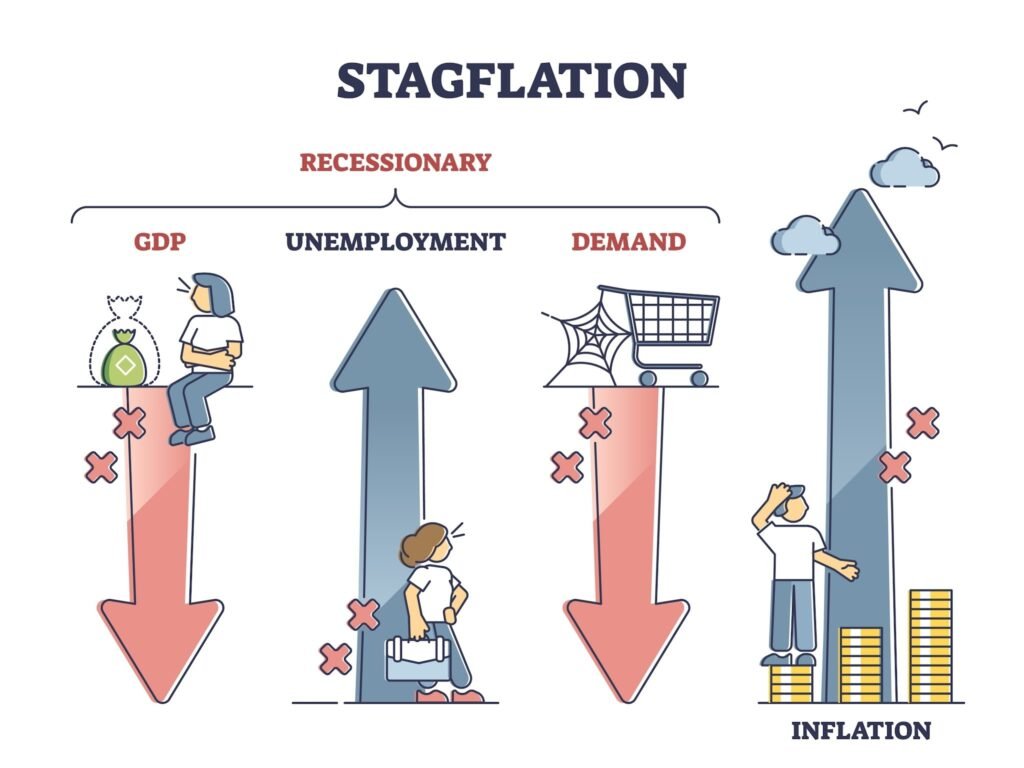
When inflation persists, it does not affect all assets equally. Some assets possess intrinsic hedges that allow them to adjust naturally to higher prices. Others are structurally rigid and lag behind, leading to a significant divergence in portfolio performance.
Why inflation changes the way investment returns behave
To understand portfolio efficiency during inflationary periods, you must strip performance down to its financial core. Performance is always a tale of two layers: the nominal return and the real return.
In a low inflation environment, these two numbers are close enough that many retail investors ignore the difference. However, in a high inflation environment, this gap becomes a chasm.
Consider a scenario where an asset returns 10% on paper. If inflation is at 3%, your wealth has grown significantly. If that same asset returns 10% but inflation is at 8%, your actual increase in wealth is a mere 2%.
This compression of returns changes how you must evaluate risk. An investment that seemed safe because of a steady 4% payout suddenly becomes a liability if inflation is sitting at 5%. This is why inflation is not merely an indicator but a direct influence on portfolio efficiency and capital allocation.
How inflation affects different types of investments
Different asset classes are built with different internal mechanics. Because of this, their response to a rising price environment varies wildly. Understanding these structural differences is the first step toward building an inflation-resilient portfolio.
Cash and savings deposits
Cash is almost always the first casualty in an inflationary cycle. While a bank balance provides a sense of security, it is a wasting asset when the cost of living outpaces the interest rate provided by the bank.
Standard savings accounts rarely offer yields that match high inflation. This creates a situation where your nominal balance stays the same or grows slightly, but your actual wealth is declining every month. Holding excessive idle cash is essentially accepting a guaranteed, silent loss of long term purchasing power.
Fixed income and bonds
Bonds and other fixed income instruments are highly sensitive to inflationary pressure. The reason is simple: the payouts are fixed in nominal terms. A bond that pays $50 a year is less attractive if that $50 can buy fewer goods next year.
When inflation climbs, the following market reactions usually occur:
- Central banks raise interest rates to reduce the money supply.
- Prices of existing bonds fall because their fixed rates are lower than new bonds coming to market.
- Investors demand higher yields to compensate for the higher risk of holding debt in an inflationary climate.
The combination of interest rate risk and the loss of purchasing power makes traditional long term bonds a difficult asset to hold during rapid price increases.
Equities and stock investments
Stocks represent an ownership stake in a revenue-generating business. This gives them a potential advantage that fixed income lacks. A company that provides an essential service or product can often raise its prices to match rising costs.
Businesses with strong pricing power and low capital expenditure requirements tend to thrive. They can pass the burden of inflation directly to the consumer, maintaining their profit margins and protecting the investor.
However, inflation also widens the gap between winners and losers. Companies with high debt loads or those that cannot easily raise prices will see their margins squeezed as their own costs for labor and materials rise.
Real assets
This category includes property, commodities, and infrastructure. These assets are often tied to tangible or scarcity-based value systems. Unlike paper currency, you cannot print more land or more gold.
In many environments, real assets become a primary tool for wealth preservation. They tend to adjust their valuation alongside the general price level of the economy. While they do not eliminate risk, they provide a structural link to the physical economy that often outpaces the devaluation of fiat currency.
What inflation does to savings in real life
From a personal finance perspective, savings are often where the impact of rising costs is most visible and immediate. The key issue is a fundamental mismatch between safety and value. Most individuals view a savings account as a safe harbor because the nominal balance does not fluctuate. However, the reality is that savings accounts protect nominal value, not purchasing power.
If your bank balance remains stable or grows slightly while the cost of essentials increases by 10%, you are witnessing a silent contraction of your future. This is why inflation quietly changes long term financial planning even when income and balances appear stable on paper. It necessitates a shift in thinking from how much money you have to what that money can actually do in the future market.
Investing during inflation: what actually matters
In real portfolio construction, high inflation periods force a shift in priorities. The goal moves from seeking the maximum possible return to ensuring real return preservation. This is a defensive posture that requires a different set of metrics than a growth-oriented market.
Investors who successfully navigate these periods typically focus on:
- Income-generating assets: Investments that provide regular cash flow to help offset rising living costs.
- Companies with pricing power: Businesses that can increase their rates without losing their customer base.
- Diversified sector exposure: Spreading risk across industries like energy or consumer staples that often benefit from price hikes.
- Inflation-adjusted performance: Judging every gain by its merit after subtracting the current inflation rate.
The core shift is psychological as much as financial. In these times, capital preservation becomes just as important as capital growth. Protecting what you have already earned is the foundation of any successful strategy during an inflationary spike.
What role platforms like Wbinvestimize actually play
When users search for how does inflation affect investments wbinvestimize, the intent is usually to determine if the platform is a legitimate resource for managing these risks. In the current digital landscape, sites with this positioning generally fall into a few specific categories.
Most function as educational finance content providers or platforms for investment commentary. The key point is not the branding, but the verification of the data provided. Before relying on any financial guidance platform, a prudent investor assesses the following signals:
- Transparency of authorship: Are the articles written by identified individuals with verifiable credentials?
- Data sourcing: Does the content cite primary sources like central bank reports or audited financial statements?
- Content nature: Is the material strictly educational or is it attempting to provide unregulated financial advice?
Without these signals, platforms like wbinvestimize should be treated as informational references rather than primary decision-making tools. They are best used to gather broad perspectives rather than specific tactical instructions.
The connection between inflation, savings, and investment strategy
Inflation forces a fundamental rebalancing of how an individual views their financial life. It creates three simultaneous pressures that require immediate attention. First, savings lose their real value over time. Second, every investment return must exceed the inflation rate to be considered meaningful. Third, asset allocation becomes far more important than individual asset selection.
This is why inflation is not just a macroeconomic topic discussed by academics. It is a personal financial planning constraint. It dictates how much risk you must take just to maintain your current lifestyle.
Why inflation cycles matter more than inflation levels
In real world financial planning, the duration of the cycle is often more critical than the peak level of inflation. Short spikes in prices behave very differently from long term inflationary cycles.
A brief spike might be ignored by central banks, allowing markets to stay stable. However, a persistent cycle forces aggressive rate changes that can trigger recessions. Understanding whether you are in a temporary bottleneck or a multi-year shift is essential for deciding whether to move into inflation-linked bonds or stick with equities.
Where investors usually misinterpret inflation impact
The most common misunderstanding in practical advisory experience is the assumption that all investments go up during inflation or that all savings lose value at the exact same rate. In reality, inflation redistributes performance across different categories.
It creates a landscape of winners and laggards. For example, some stocks might crash due to rising input costs, while others soar because they own the raw materials. Understanding this internal redistribution is more important than simply predicting the next inflation report.
Frequently Asked Questions
How does inflation affect investments in simple terms?
Inflation reduces the real value of your profit. If your investment grows, but the cost of living grows faster, your purchasing power actually goes down.
How does inflation affect savings?
Savings lose value if the interest the bank pays you is lower than the inflation rate. You might have the same amount of money, but it buys fewer things.
Is investing during inflation risky?
Risk depends entirely on the asset type. Fixed income is generally high risk during inflation, while tangible assets often carry lower risk regarding value preservation.
Which investments usually perform better during inflation?
Assets with pricing power, such as major consumer brands, or physical assets like real estate and commodities, tend to perform better.
What is the difference between nominal return and real return?
Nominal return is the profit you see on your statement. Real return is what is left over after you subtract the inflation rate.
Is Wbinvestimize a financial advisory platform?
Based on search intent, such platforms are usually informational. You should always verify the transparency and sourcing of any site before using its content for financial decisions.