
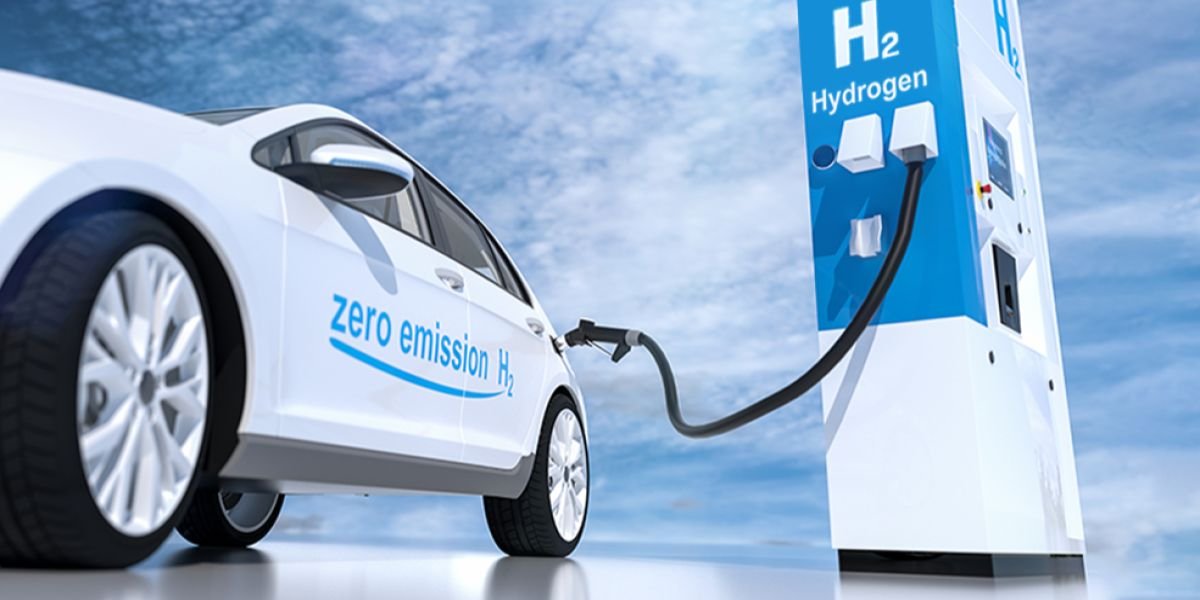
The global shift away from gasoline and diesel is no longer a race with a single runner. While battery-electric options have captured early consumer headlines, intense development is happening behind the scenes on an alternative path. Fuel cell vehicles are securing substantial investments from logistics giants, heavy equipment manufacturers, and global transit networks looking to solve the limits of battery weight and charging downtime.
Hydrogen vehicle technology approaches zero-emission mobility from a different angle. Instead of storing grid electricity inside hundreds of kilograms of lithium-ion cells, these vehicles carry compressed hydrogen gas and generate their own electricity on board. This setup merges the driving characteristics of an electric vehicle with the rapid fueling habits of a traditional combustion engine.
While consumer adoption for everyday passenger cars remains modest due to infrastructure constraints, the commercial sector is telling a different story. For long-haul freight, regional bus fleets, and high-duty cycle industrial equipment, managing heavy payloads without long charging stops makes hydrogen a highly practical fit. This guide breaks down the underlying engineering, deployment sectors, and the real-world economics determining where hydrogen fits in the future of transport.
What Is Hydrogen Vehicle Technology?
Hydrogen vehicle technology uses hydrogen gas as the primary onboard energy carrier rather than petroleum fuels or grid-tethered battery packs. The core goal is to power an electric drivetrain without the associated weight penalties and extended downtime typical of large-capacity battery installations.
Most hydrogen vehicles operating today are classified as Fuel Cell Electric Vehicles, or FCEVs. These vehicles function as mobile chemical power plants. By mixing onboard hydrogen with oxygen drawn from the ambient air, they trigger an electrochemical reaction that yields a steady electrical current and releases pure water vapor as its only operational byproduct.
Unlike a pure battery-electric system that acts solely as an energy storage bank, an FCEV works through continuous power generation. The vehicle keeps producing electricity as long as there is hydrogen flowing from the fuel tanks, removing the need to park next to a high-power charging grid for hours at a time.
This configuration effectively bridges two distinct automotive worlds. The end-user experiences the immediate torque, near-silent operation, and mechanical simplicity of an electric motor, yet they can pull up to a pump and replenish hundreds of kilometers of range in a few minutes.
How a Hydrogen-Powered Vehicle Produces Electricity
The science driving hydrogen mobility relies on cold chemical conversion rather than thermal combustion. By avoiding the process of burning fuel to create mechanical expansion, the system bypasses the thermal inefficiencies and toxic exhaust pollutants inherent to conventional engines.
The process centers around an electrochemical device known as a fuel cell. Hydrogen gas is released from high-pressure storage and directed to the anode side of the cell, while clean air is pulled from the outside environment and pushed into the cathode side.
A specialized catalytic membrane coated with precious metals sits between these two sections. This layer forces the arriving hydrogen molecules to split apart, separating their electrons from their protons.
Because the central membrane acts as an insulator, the freed electrons cannot pass straight through it. Instead, they are forced to travel along an external circuit, creating a continuous flow of electricity. This electrical current is routed directly to the power management system to run the vehicle motors.
Meanwhile, the separated protons migrate straight through the membrane to the cathode side. There, they reunite with the returning electrons and combine with ambient oxygen, creating water molecules. The water is then expelled through an open tailpipe as clean vapor.
The Components That Make Hydrogen Mobility Possible
A functional hydrogen vehicle relies on a highly integrated network of mechanical, electrical, and chemical systems. Each component must manage volatile gases, high voltages, or fast data processing in real time to ensure safe and efficient operation.
Hydrogen Storage Tanks
Storing a gas that is incredibly light and diffuse requires specialized containment. Modern vehicles use advanced multi-layer cylinders, typically classified as Type 4 tanks. These components feature a non-corrosive plastic liner wrapped completely in a thick, high-tensile carbon-fiber composite matrix to withstand extreme physical pressures.
Storage systems operate at standardized pressures, with 700 bar being the benchmark for passenger cars and 350 bar commonly used for larger commercial platforms. To earn safety certifications, these tanks must survive severe testing regimens.
- Physical drop tests from multiple angles
- Direct ballistic penetration testing
- Sustained exposure to open fires and extreme ambient temperatures
- Structural fatigue cycles mimicking decades of continuous refills
Fuel Cell Stack
A single fuel cell only produces a modest voltage, which is insufficient for moving a multi-ton vehicle. To generate practical levels of propulsive force, manufacturers assemble hundreds of individual cells in a tight series configuration known as a fuel cell stack.
The stack acts as the primary engine room, continually adjusting its electrical output based on the driver’s throttle inputs. Engineers focus heavily on maximizing power density within the stack, attempting to shrink its physical footprint while using less expensive catalyst materials like platinum to drive down production costs.
Electric Drive Motor
The electricity harvested from the fuel cell stack feeds into a high-output electric traction motor. This component is identical in function to the motors found in standard battery-electric vehicles, giving hydrogen transport its distinctive driving dynamics.
- Instantaneous torque delivery from a complete stop
- Smooth, single-speed power transmission without gear shifts
- Minimal mechanical wear due to a low count of moving parts
- Highly quiet operation that significantly lowers urban noise pollution
Battery Pack
Even though hydrogen is the primary fuel source, almost all FCEVs include a secondary high-voltage lithium-ion battery. This pack is significantly smaller than the massive batteries found in pure electric cars, acting as an energy buffer rather than the main power reservoir.
This auxiliary battery serves two critical operational roles. It captures and stores kinetic energy harvested through regenerative braking during deceleration, and it delivers a fast burst of supplementary electrical power during hard acceleration when the fuel cell stack is ramping up its production output.
Types of Hydrogen Vehicles
The automotive industry is actively exploring two distinct mechanical pathways for using hydrogen. While they share the same base fuel supply, their internal architecture, manufacturing economics, and targeted operational roles differ completely.
Fuel Cell Electric Vehicles
As established, FCEVs represent the dominant application of hydrogen technology in current passenger models and transit buses. They treat hydrogen purely as a chemical source for clean electricity generation. Vehicles like the Toyota Mirai and the Hyundai Nexo showcase this design path, relying completely on chemical conversion and electric motors for everyday operations.
Hydrogen Internal Combustion Engine Vehicles
The alternative method uses modified conventional engine blocks to burn hydrogen gas directly within mechanical cylinders. This approach bypasses the delicate chemistry of fuel cells entirely, relying instead on traditional spark ignition and piston movement to generate physical torque.
Industrial manufacturers are investing heavily in this mechanical path for heavy-duty machinery. The appeal lies in its rugged durability and its ability to tolerate dirty, dusty environments that would quickly contaminate or damage sensitive fuel cell membranes.
Furthermore, this technology can be manufactured using existing engine assembly lines, presenting a lower initial cost barrier for heavy industries looking to reduce their carbon output quickly.
Why Automakers Continue to Invest in Hydrogen
The sustained financial and engineering commitment to hydrogen stems from a clear recognition that battery-electric platforms face stark physical limitations in high-demand transportation sectors. While batteries excel at powering lightweight consumer cars parked overnight in residential garages, their real-world utility drops when applied to heavy, non-stop commercial operations.
Weight and time represent the primary friction points. As a vehicle gets larger and its intended daily travel distance increases, the required battery pack size scales exponentially. For a long-haul semi-truck, a battery capable of delivering true long-range performance can weigh several tons, which directly cuts into the legal payload capacity the truck is allowed to haul.
Hydrogen bypasses this weight penalty because its energy density is vastly superior on a per-mass basis. Increasing the driving range of a hydrogen truck simply requires installing larger, lightweight carbon-fiber tanks rather than stacking more heavy battery cells. This allows freight operators to maximize cargo capacity while keeping vehicle weights within legal road limits.
Operating downtime is equally critical for commercial fleets. A delivery truck or transit bus only generates revenue when it is moving. Spending multiple hours tied to a high-megawatt charging cable severely compromises fleet productivity. Hydrogen vehicles can return to service in minutes, allowing logistics operations to maintain their tight round-the-clock schedules.
The Real-World Benefits of Hydrogen-Powered Transportation
When deployed in appropriate operational settings, hydrogen systems offer distinct performance advantages over both traditional fossil fuels and battery alternatives. These benefits become especially apparent when analyzing large-scale commercial fleet data.
Fast Refueling
The primary user benefit of hydrogen is its direct parity with conventional fueling habits. Replenishing empty onboard tanks at a commercial dispenser takes between three and five minutes for consumer vehicles, and roughly ten to fifteen minutes for large transit buses or long-haul freight trucks. This fast turnaround minimizes station downtime across fleet networks.
Long Driving Range
Hydrogen vehicles excel at covering vast distances without mid-route interruptions. Modern fuel cell passenger cars routinely deliver driving ranges between 500 and 700 kilometers per fill. In heavy-duty trucking configurations, advanced configurations can clear even larger distances, making them viable for cross-country logistics routes.
Zero Tailpipe Carbon Emissions
From an environmental standpoint, an FCEV functions cleanly within congested urban environments. The vehicle emits zero carbon dioxide, zero nitrogen oxides, and zero particulate matter from its exhaust system. The sole operational byproduct is pure water vapor, which helps improve local air quality in densely populated city centers.
Strong Potential for Heavy-Duty Transportation
The operational scaling properties of hydrogen make it highly effective for specialized high-power industries. The technology is modular and lightweight enough to be integrated successfully into demanding industrial applications.
- Long-haul freight transportation across regional highways
- Double-decker city transit and intercity passenger buses
- Heavy construction equipment, like excavators and front loaders
- High-capacity mining haul trucks working remote sites
- Port logistics vehicles operating around continuous maritime shipping docks
The Barriers Slowing Widespread Adoption
While the operational perks of hydrogen are significant, several systemic, economic, and chemical hurdles continue to restrict its widespread commercial rollout. Understanding these barriers explains why the technology has not yet achieved mass-market saturation.
Limited Refueling Infrastructure
The single largest practical barrier is the lack of public retail stations. Building out a functional hydrogen distribution network requires massive initial capital. Retail stations need specialized cryogenic storage setups, high-pressure compressors, and heavy-duty chilling units to safely pump gas into vehicles, making them far more complex and expensive to install than standard EV chargers.
Higher Vehicle Costs
On the manufacturing front, fuel cell vehicles carry a substantial premium over both internal combustion and battery-electric models. The reliance on expensive platinum group catalysts inside the fuel cell stack, combined with the complex carbon-fiber weaves required for certified 700-bar storage tanks, keeps production costs high while factory volumes remain low.
Hydrogen Production Concerns
Evaluating the true environmental impact of hydrogen requires looking closely at how the gas is sourced. Hydrogen is an energy carrier, not a raw fuel resource, meaning it must be extracted from other compounds using energy-intensive methods.
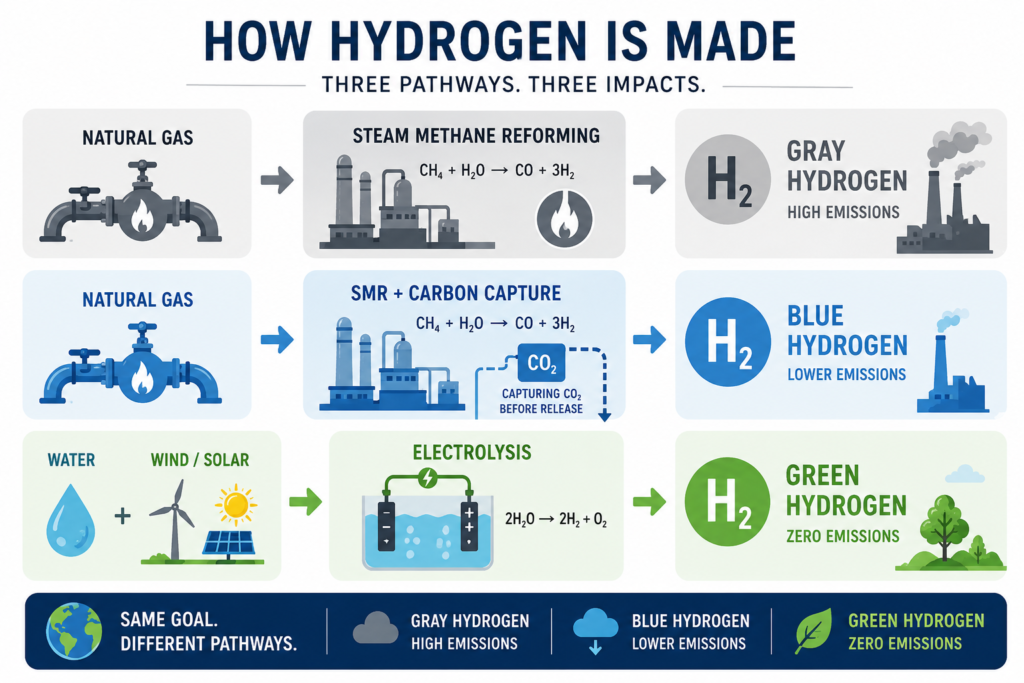
Currently, Gray Hydrogen remains the most dominant and inexpensive form available, but its production relies on fossil fuels and releases significant carbon dioxide. Blue Hydrogen captures a portion of those emissions, but it serves as an intermediate step. Green Hydrogen, split from water using renewable electricity, is the ultimate goal for true zero-emission transport, but its production volume remains low, and market prices are high.
Energy Efficiency Questions
The complete well-to-wheel efficiency of a hydrogen drivetrain is notably lower than a direct battery-electric loop. The process requires using electricity to generate hydrogen via electrolysis, compressing and chilling the gas for transport, hauling it to a station, and then converting it back into electricity inside the vehicle.
Significant energy is lost as heat at each distinct transformation step. A battery-electric vehicle, by contrast, sends grid electricity almost directly into the vehicle battery with minimal conversion losses, making it the more thermodynamically efficient choice for standard light-duty transit.
How Major Automakers Are Approaching Hydrogen Development
Global vehicle manufacturers are split on how to budget their zero-emission research and development portfolios. A dedicated group of major automotive brands continues to invest heavily in hydrogen engineering, focusing on long-term diversification.
Toyota
Toyota remains a primary global champion of fuel cell integration. The brand views hydrogen as an indispensable pillar of a balanced carbon-neutral future. Alongside updating its dedicated passenger platforms, Toyota is actively adapting its fuel cell stacks for use in heavy-duty commercial semi-trucks, stationary backup generators, and maritime vessels.
Hyundai
Hyundai has committed deep financial and engineering resources to its proprietary fuel cell initiative. The company is actively scaling up production of both consumer models and heavy-duty commercial transport options. Hyundai is also securing strategic partnerships across Europe and North America to co-develop regional logistics corridors and hydrogen supply lines.
BMW
BMW is maintaining a flexible development track by exploring fuel cell variants within its premium passenger lineup. Working in technical partnership with other industry leaders, the company views hydrogen as a valuable option for drivers who live in apartments without home-charging access or those who frequently travel long distances in cold climates.
Daimler Truck
Daimler Truck has focused its hydrogen strategy entirely on the heavy commercial sector. Operating through corporate joint ventures, the manufacturer is engineering dedicated long-haul platforms built to transport heavy freight across continents, viewing hydrogen as the only viable path to fully decarbonize long-distance logistics.
Recent Developments Shaping Hydrogen Mobility
The engineering and commercial landscape surrounding hydrogen transportation is shifting rapidly as real-world field data accumulates from new pilot programs across major markets.
India Launches Hydrogen Transport Pilots
In major developing economies, heavy investments are moving from theoretical models to active highway testing. India recently deployed a series of hydrogen-powered commercial vehicle pilots along active transit corridors. Backed by corporate consortia including Reliance, Tata, NTPC, and Ashok Leyland, these initiatives are gathering real-world operational data on how fuel cell buses and freight trucks perform under harsh climate and high-load conditions.
Next-Generation Fuel Cells Reach Commercial Testing
On the technical front, fuel cell efficiency is seeing measurable gains through specialized joint development. Cellcentric, the joint engineering venture linking Daimler Truck and Volvo Group, has moved its new BZA375 fuel cell system into active commercial field trials. The system represents a noticeable design step forward, delivering higher power density and optimized hydrogen consumption while significantly reducing total component weight for heavy-duty integration.
Mercedes-Benz Advances Hydrogen Trucks
These stack improvements are directly enabling longer real-world operating ranges. Mercedes-Benz is advancing its heavy freight programs, pushing its NextGenH2 truck toward limited production runs with customer deliveries scheduled to begin through late 2026. By utilizing liquid hydrogen storage rather than compressed gas, the platform is targeting operational ranges exceeding 1,000 kilometers on a single fill, aiming for true performance parity with conventional diesel trucks.
Hydrogen Bus Technology Improves
Concurrently, public transit systems are benefiting from upgraded core components. Industrial supplier Ballard has rolled out its latest generation of fuel cell modules designed specifically for city bus chassis. These upgraded systems focus heavily on extending operating lifetimes and lowering routine maintenance costs, helping municipal transit agencies hit zero-emission targets without hurting their bottom-line budgets.
Mixed Industry Signals
The broader market, however, continues to show mixed strategic signals. While heavy commercial developers are expanding their long-term hydrogen programs, some multi-brand consumer automotive groups have adjusted their focus. Stellantis modified its initial fuel cell joint venture structures, and Honda has realigned certain manufacturing operations to prioritize battery-electric lines for smaller passenger models. These shifts highlight a growing industry consensus: hydrogen development is increasingly consolidating around heavy commercial applications rather than standard consumer cars.
Why Commercial Transportation May Become Hydrogen’s Largest Market
The financial realities of industrial logistics are shifting the hydrogen conversation away from consumer driveways and toward heavy-duty commercial hubs. While passenger vehicles operate on highly unpredictable routes and spend most of their time parked, commercial fleets run on rigid, predictable schedules where asset utilization dictates profitability.
Long-haul freight operations highlight the sharp physical boundaries of pure battery-electric designs. Moving a 40-ton semi-truck across hundreds of kilometers requires an enormous amount of energy. If powered entirely by lithium-ion batteries, the weight of the battery cells alone can reach several tons, which directly reduces the legal cargo weight the truck can carry.
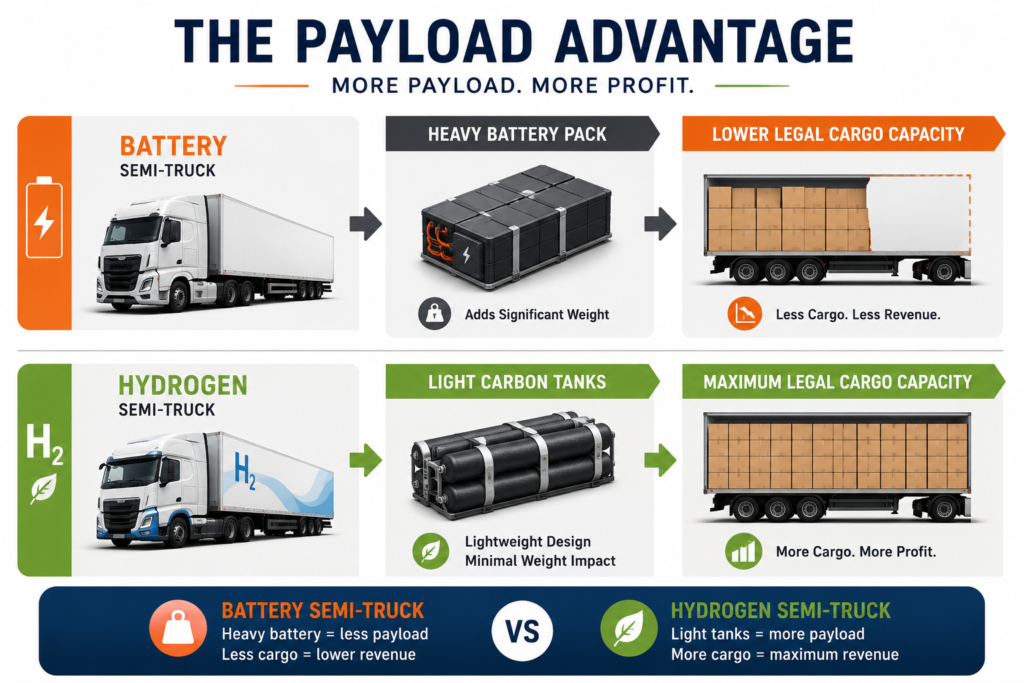
Hydrogen platforms resolve this fundamental payload trade-off. Because hydrogen boasts a high energy density by mass, expanding a truck’s range requires adding larger, lightweight carbon-fiber composite tanks rather than heavy battery modules. This lets logistics firms run clean vehicles at maximum freight capacity.
Operational downtime is equally critical. For a distribution hub or a municipal transit authority, every hour a vehicle spends tied to an electrical charging cable is an hour it fails to generate revenue.
Municipal transit departments are deploying fuel cell buses to maintain uninterrupted schedules. These buses run complete daily shifts, keeping their passenger heaters or air conditioning units fully powered in extreme weather, and return to service after a quick ten-minute fill.
Similarly, the heavy construction and mining sectors are testing hydrogen-powered machinery. On remote job sites, building out high-power grid connections to recharge massive electric excavators is often logistically impossible or economically impractical, making mobile hydrogen refueling a highly flexible alternative.
Where Hydrogen Mobility Could Be Headed Next
The long-term trajectory of hydrogen transportation relies on solving broader supply chain economics rather than perfecting vehicle mechanics. Over the next decade, the technology will either transition into a foundational pillar of global logistics or settle into a niche alternative for highly specialized industrial use cases.
The absolute baseline requirement for market growth is scaling the production of green hydrogen. As the global supply of solar, wind, and hydroelectric power expands, the cost of running industrial water electrolyzers is projected to decline. Bringing green hydrogen down to price parity with untaxed diesel fuel will be the primary tipping point for fleet operators considering a fleet-wide transition.
Hand in hand with supply scaling comes the deployment of high-capacity fueling corridors. Instead of trying to mimic the vast footprint of passenger gas stations, initial infrastructure strategies are focusing on dedicated point-to-point freight corridors.
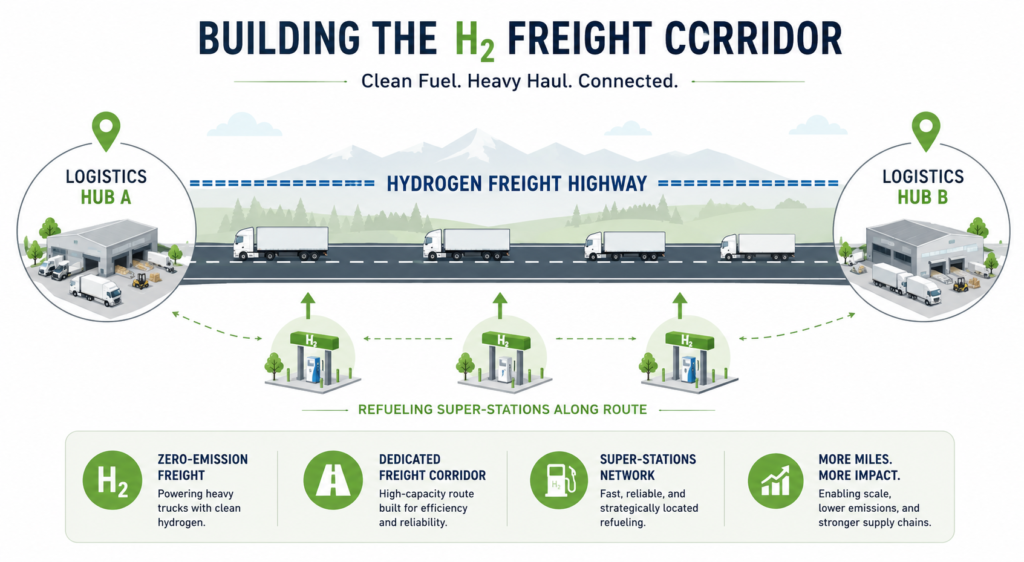
Building high-throughput, automated fueling super-stations at major shipping ports, distribution centers, and along major interstate highways allows developers to support thousands of commercial trucks with a relatively compact infrastructure footprint.
Ultimately, sustained commercial demand will dictate production economics. If international shipping firms, municipal transit networks, and heavy equipment manufacturers embrace fuel cell tech at scale, it will trigger the manufacturing volumes needed to lower vehicle purchase prices. This industrial momentum could eventually lower component costs enough to make consumer passenger fuel cell cars a practical reality.
The Bottom Line
Hydrogen vehicle technology provides a highly capable tool in the broader global effort to decarbonize transport. By matching the smooth performance and zero emissions of an electric drivetrain with the fast fueling habits of traditional combustion engines, it solves the unique operational challenges that battery-electric platforms struggle to address.
Significant hurdles remain. Expanding high-pressure distribution networks, reducing the manufacturing costs of fuel cell stacks, and building out clean, green hydrogen production lines require substantial capital and long-term public-private partnerships.
However, the focused engineering investments from commercial truck developers, industrial equipment builders, and global energy companies confirm that hydrogen is establishing a permanent role in the future of transport. Far from competing directly with battery-electric cars, hydrogen is emerging as a vital complementary technology, proving its value in heavy-duty, long-distance sectors where weight, range, and operational uptime matter most.