The digital commerce space moves at the speed of a smartphone scroll. Business-to-consumer marketing is the playbook brands use to grab attention, build trust, and convince everyday shoppers to buy.
To succeed today, you cannot rely on old marketing scripts. You have to understand modern online shopping habits, smart data platforms, and how to show up consistently across different digital channels.
This guide breaks down exactly how consumer marketing works, how top brands win customers, and how you can apply these strategies to your own business.
What is B2C Marketing?
B2C marketing refers to the strategies, tools, and campaigns a business uses to sell products or services directly to individual customers. The main feature here is the direct relationship. The company making or selling the product connects straight with the person who will actually use it, cutting out middle procurement teams or corporate gatekeepers.
Think about the difference in scale and speed. An enterprise B2B deal can take six months of meetings, legal reviews, and formal contract bids. B2C marketing, on the other hand, thrives on immediate personal needs, quick decisions, and easy checkouts.
The goal is to align your product with what a shopper wants right now. This requires listening to customer feedback and constantly tweaking your ads and social posts to match their daily habits.
B2C Meaning
The term stands for Business-to-Consumer. Each part of the phrase shows a specific role in the daily economy.
- Business: The company creating the product, managing inventory, handling shipping, and running marketing campaigns.
- To: The direct pipeline, communication, and delivery system that connects the brand straight to the buyer without wholesale distributors or wholesale agents in the middle.
- Consumer: The individual person making the final choice to buy based on their own budget, personal tastes, and household needs.
In this relationship, the shopper makes the decision entirely on their own terms. They spend their own money, and they are the final judge of whether the product was worth it.
How B2C Marketing Works in Real Consumer Journeys
Today, customers do not follow a straight path before buying. The traditional funnel where someone sees an ad, clicks a link, and immediately buys is mostly gone. Instead, modern online shopping is a looping journey where people bounce between discovering new items, comparing options, and getting distracted.
A typical shopper might see a new product casually while watching a video on social media. They do not buy it right away, but that view drops them into a retargeting audience. Over the next week, they see the brand again through customer reviews, an unboxing video from a creator, or a helpful blog post.
The evaluation happens while they live their daily life. A shopper might add an item to an online cart on their phone, close the app to check a competitor price on Google, and forget about it.
They might only finish the purchase days later when they get an automated coupon via email or a text message. The final sale is a mix of good timing, brand trust, and a fast checkout experience.
Key Characteristics of B2C Marketing
Emotional Buying Decisions
Corporate buyers use return-on-investment spreadsheets to justify a purchase. Everyday consumers buy based on identity, comfort, status, or simply fixing a frustration. Shoppers usually make a choice based on a feeling or an immediate need, then use logic later to justify the spend.
Fast Sales Cycles
Consumer shopping moves incredibly fast. A massive portion of daily online sales happens within minutes or hours of someone discovering a product. Flash sales, low-stock alerts, and mobile wallets make it easy for someone to go from wanting an item to owning it with a single tap.
Large, Targeted Audiences
B2C brands do not sell to a small list of corporate clients. They target thousands or millions of potential buyers. To avoid wasting ad spend on such a large scale, brands use data platforms to split audiences into targeted groups based on specific hobbies, past shopping habits, and age ranges.
Fierce Competition for Attention
The modern internet is crowded and noisy. Brands are not just competing against direct rivals; they are competing against text messages, notifications, and viral videos. A great product will fail if the brand cannot capture a shopper attention within the first three seconds of an online scroll.
Why Consumers Actually Buy (Behavioral Drivers)
Human beings use mental shortcuts to make thousands of daily choices without burning out. Great marketing campaigns are built around these natural habits to make choosing a product feel like an easy decision.
According to consumer insights from Shopify Research, modern shoppers look for clear value, price transparency, and fair return policies before they trust a new store. When those basics are covered, specific psychological triggers help close the sale:
- Emotional Value: Products that promise to solve an annoying daily problem, save time, or make someone feel good convert much better than items sold purely on technical specs.
- Social Validation: People trust the crowd. High review scores, detailed customer testimonials, and real video clips from other buyers serve as proof that a product works.
- The Power of Familiarity: The more times a consumer sees a brand across different websites and apps, the more they naturally grow to trust it when they enter a buying frame of mind.
- Scarcity and Urgency: Real limits on availability, such as a holiday deadline or a limited-edition drop, encourage shoppers to act instead of putting the decision off for later.
- Extreme Convenience: The easiest option usually wins the sale. Pre-saved shipping data, free delivery options, and local drop-off returns remove the friction that causes cart abandonment.
What Makes B2C Marketing Different from B2B Marketing
The split between consumer marketing and B2B marketing comes down to risk and accountability. If a consumer makes a bad purchase, they only lose a small amount of personal money and deal with the frustration themselves.
If a B2B buyer makes a mistake, it can ruin a department budget, slow down corporate work, or put their job at risk. Data from Gartner shows that corporate procurement teams spend a massive portion of their buying cycle doing independent research before they ever talk to a sales rep.
| Marketing Element | B2C Marketing | B2B Marketing |
| Sales Speed | Fast; often completed in minutes or hours | Slow; takes weeks, months, or quarters |
| Decision Makers | Usually one individual or household | Groups of 6 to 10 corporate stakeholders |
| Messaging Style | Relatable, story-driven, and emotional | Technical, logic-focused, and case-study heavy |
| Pricing Setup | Fixed, public pricing for everyone | Custom quotes, volume discounts, and contracts |
Core B2C Marketing Strategies
Content Marketing for Trust
Modern shoppers ignore aggressive sales pitches. Successful brands lead with content that entertains or teaches first. By publishing quick style tips, recipe guides, or troubleshooting videos, companies build a loyal audience before asking them to browse a store catalog. To keep content production efficient, many marketing teams create video explainers and educational clips that help shoppers understand products while strengthening brand credibility
Brand Positioning and Identity
Products can be copied, but a strong brand cannot. Industry leaders build an identity that connects with a specific lifestyle or value system. When a customer buys from them, they are buying a product that reflects how they view themselves.
Paid Ads for Fast Scaling
To grow quickly, e-commerce stores deploy ad spend across Google, Meta, and TikTok. These ad platforms allow businesses to bid for premium screen space, show ads to highly specific demographic groups, and test different images and headlines to find what converts best.
Creator and Influencer Partnerships
Shoppers trust people more than corporate logos. Partnering with creators who have built real relationships with their followers allows brands to introduce products naturally. A simple product recommendation from a trusted creator often outperforms a massive corporate ad campaign.
Smart Retargeting Ad Flows
Since the majority of first-time website visitors leave without buying anything, smart brands use automated retargeting ads. These campaigns serve tailored messages or gentle reminders to people who have already looked at a specific item, answering their doubts over time until they are ready to buy.
How Social Media Shapes B2C Marketing
Social media has completely flipped how people discover new products. In the past, shopping was driven by search intent. You realized you needed an item, went to a search engine, and looked for a store.
Today, discovery happens passively while you scroll through an app. Recommendation algorithms figure out what you might like based on your viewing habits and serve it to you before you even look for it.
Social commerce has turned social platforms into direct digital storefronts. Apps keep users engaged with video feeds while letting them buy products natively without leaving the app. You can discover an item, see a video of someone using it, read real comments, and check out with a single tap.
This means trends spark and scale globally in a matter of days. A product can go viral over a weekend because an algorithm pushed a specific style of video to millions of feeds. Brands have to stay nimble, creating casual, authentic video content that matches the fast moving culture of the internet.
Real-World B2C Marketing Systems
Amazon: The Personalized Commerce Engine
The world’s largest online retailer does not use a static homepage. Instead, it runs an advanced recommendation system driven by real-time customer behavior. Every search, product click, scroll depth, and past order alters what you see on your screen.
This extreme level of personalization makes shopping completely frictionless. By looking at data across millions of active shoppers, the platform accurately predicts what you might need next, displaying helpful bundles and related items right when you are ready to check out.
Netflix: The Retention Marketing Playbook
For subscription businesses, getting a customer to sign up is only the first step. Long-term success depends on keeping them month after month. The streaming platform treats its entire app as a dynamic marketing tool, using data on watch histories, pause times, and genre preferences to customize the user experience.
This automated personalization even changes the promotional artwork you see. If the platform knows you prefer romance or action, the thumbnail image for a movie changes to highlight those specific themes. This keeps users scrolling and engaged, keeping cancellation rates incredibly low.
Nike: Emotional Storytelling over Product Features
The global sportswear brand rarely uses its main commercials to talk about shoe foam or fabric technology. Instead, their marketing strategy focuses almost entirely on human stories, motivation, and overcoming obstacles.
By connecting their gear to iconic athletes and personal fitness journeys, they build an incredibly strong emotional bond with their audience. Customers do not just buy the shoes for physical utility; they buy them to feel connected to a global fitness community, allowing the brand to maintain a premium price over generic competitors.
How B2C Affiliate Marketing Works
B2C affiliate marketing is a performance-based system where independent creators, websites, and publishers promote a store’s products and earn a percentage commission on any sales they generate.
It relies on a simple transfer of trust. Shoppers are skeptical of traditional corporate ads, but they routinely buy things recommended by bloggers, reviewers, or creators they trust. When an affiliate partner shares a genuine review with their custom tracking link, the brand gains warm, ready-to-buy traffic.
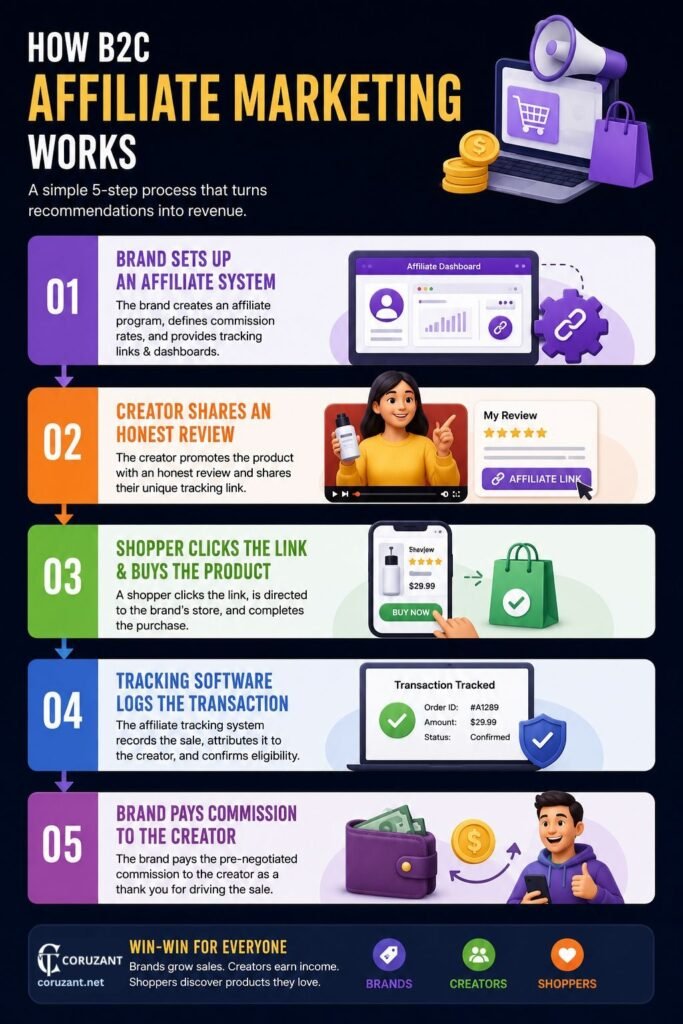
This model is popular for e-commerce brands because it is a low-risk way to grow. You do not pay for impressions or clicks that lead nowhere. You only pay your affiliate partners after a successful sale is verified by your software, protecting your profit margins while expanding your reach into new online communities.
The Modern E-Commerce Marketing Funnel
The old linear sales funnel has evolved into a circular loop. Customers can enter or leave at various points, making it essential to provide a great experience at every stage.
1. Awareness (Attracting Attention)
This is where discovery happens. Brands use engaging short-form videos, helpful blog articles, and targeted social media ads to introduce themselves to shoppers who are currently browsing entertainment feeds.
2. Consideration (Building Trust)
Once a shopper is interested, they start researching. They look for independent product reviews on YouTube, check star ratings, read community forums, and compare your prices to make sure your brand is legitimate and high quality.
3. Conversion (The Purchase Moment)
This stage is all about speed and simplicity. Removing technical steps from your website checkout page—like offering express guest checkout and clear shipping dates—ensures the buyer completes the purchase before getting distracted.
4. Retention (Creating Repeat Buyers)
The journey does not end at the checkout screen. Post-purchase marketing uses automated email welcome flows, helpful care guides, and loyalty points to turn one-time buyers into repeat customers, lowering your long-term ad costs.
Marketing Channels That Work Together
Organic Marketing Channels
Building long-term traffic requires a solid foundation in search engine optimization (SEO), useful blog content, and consistent social media video posts. These channels take time to grow, but they generate a steady stream of interested visitors without costing you money per click.
Paid Marketing Channels
When you need to clear inventory, scale a promotion, or launch a new product quickly, you use paid ad channels. Bidding for space on Google Search or running catalog ads on Meta gives you immediate visibility and total control over exactly who sees your store.
Community and Word-of-Mouth Channels
The strongest marketing strategies build a loop by turning customers into advocates. Referral programs, customer loyalty rewards, and ambassador setups encourage your existing buyers to talk about your products online, creating authentic growth that scales naturally.
Real-World Campaign Examples and Applied Tactics
To understand how these concepts operate on a daily basis, look at the concrete workflows deployed by successful direct-to-consumer (DTC) brands and local e-commerce stores.
A Real Abandoned Cart Recovery Flow
Most online shoppers leave a store with items still sitting in their digital cart. To recover this lost revenue, performance marketers do not just send a single generic email reminder. They build an automated three-step messaging sequence designed to systematically clear buyer doubts:
- Trigger: A customer enters their contact info but closes the browser tab without completing the purchase.
- Hour 1 (The Helpful Reminder): An automated email goes out with a simple, helpful subject line. The message assumes a technical glitch occurred, displays a picture of the exact item left behind, and includes a direct link to return to the checkout screen.
- Hour 24 (The Social Proof Drop): If they haven’t purchased, a secondary email arrives. Instead of offering a discount, this message highlights real customer reviews and unboxing videos from buyers who love that exact product, answering quality doubts.
- Hour 48 (The Incentive Option): The final email introduces a small incentive, like free shipping or a 10% discount code that expires in 12 hours, creating a gentle sense of urgency to close the sale.
How Small E-Commerce Stores Use Meta Ads Step-by-Step
Small businesses cannot afford to spend thousands of dollars on broad awareness ads. They use a practical, data-driven approach to find profitable customers with a modest daily budget:
- Step 1 (The Creative Test): The store launches an ad campaign using three distinct video styles: a quick product demonstration, a customer testimonial video, and a behind-the-scenes clip showing how the product is made.
- Step 2 (The Mid-Funnel Audience Build): As people watch these videos on Instagram or Facebook, the ad platform tracks who engages. The store creates a custom audience containing anyone who watched at least 50% of a video asset.
- Step 3 (The Conversion Push): The store runs a secondary ad campaign targeted exclusively at that custom audience. Because these viewers are already familiar with the product, the ad uses a direct call-to-action showcasing a customer favorite bundle to secure the purchase.
Modern Trends in B2C Marketing
Marketing automation tools have made hyper-personalization accessible to businesses of all sizes. Automated software can now adjust website banners based on what a user looked at previously, write custom ad variations for different shopper segments, and handle basic tracking updates instantly, keeping marketing operations highly efficient.
At the same time, consumer attention has shifted heavily toward raw, casual, short-form vertical videos. Traditional, overly polished commercials are being replaced by simple smartphone clips that look like updates from a friend.
Successful stores have moved away from running massive, static seasonal campaigns. Instead, they run continuous, agile marketing loops that constantly test new creative formats, listen to shopper feedback, and adjust their messaging in real time.
Closing Lines
Winning customer loyalty today is not about shouting louder or spending more money on generic ads. It is about building a helpful, connected shopping experience that respects your audience’s time and attention. The brands that win are the ones that pair clean data insights with real human psychology, ensuring every digital touchpoint feels natural and useful to the shopper.
Long-term success belongs to businesses that look past the initial checkout screen. By focusing on honest brand positioning, removing technical website friction, and building continuous communication loops, you can turn casual first-time viewers into a loyal customer base that sustains your business over time.
FAQs about B2C Marketing
What is B2C marketing in simple terms?
It is any strategy or campaign a business uses to talk directly to everyday individuals and convince them to purchase products or services for their personal use.
What are common examples of B2C marketing campaigns?
Examples include a targeted product ad on your social media feed, a personalized discount code sent to your email inbox, an influencer reviewing clothing on video, and a seasonal sale banner on a favorite retail website.
What is the main goal of consumer marketing?
The goal is to capture shopper attention, build clear brand trust, make the checkout process incredibly easy, and keep customers coming back so they buy from your store repeatedly over time.
How does social media change how consumers shop?
It turns shopping into a passive experience. Instead of searching for an item when a need arises, algorithmic video feeds introduce relevant products to shoppers while they are online watching entertainment.
What is the main difference between B2C and B2B marketing?
B2C marketing focuses on quick, emotion-driven choices made by individual shoppers. B2B marketing involves long, logic-heavy review processes with multiple corporate stakeholders checking company requirements.