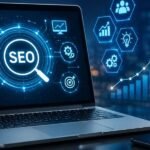

Every second, millions of users turn to search engines to find medical solutions, answers to complex questions, or services for a specific business need. If your website holds the relevant answer but remains buried on the second page, you effectively do not exist to those users. Building a sustainable online presence requires more than just launching a site. It demands a deep understanding of how information is sorted and delivered to the person behind the screen.
Modern growth relies on capturing attention at the exact moment a prospect is looking for a solution. When a brand achieves high placement in these results, it effectively bypasses the high costs of traditional advertising. Instead of pushing messages onto an uninterested audience, the goal is to pull in qualified leads by offering the most relevant information available for their specific query.
Unlike other marketing techniques, SEO marketing allows your audience to find you instead of you having to hunt for them.
This guide will help you understand what real SEO is and, more importantly, how to get it done.
SEO (Search Engine Optimization) Definition
Search Engine Optimization (SEO) is the process of improving a website to increase its visibility for relevant searches. This practice focuses on aligning a digital property with the specific signals that search engines use to measure relevance and authority.
When a site is optimized, it becomes easier for search engines to recognize that a specific page is the most valuable answer to a user’s question. This involves a combination of technical adjustments, content quality, and the overall reputation of the domain.
What is SEO Marketing?
SEO marketing is the strategic application of optimization techniques to reach business goals without paying for individual clicks. Unlike social media marketing, which relies on a temporary feed, or email marketing, which requires an existing list, this approach positions a brand in front of potential customers at the exact moment they are seeking a solution.
This discipline involves a mix of content strategy, technical site health, and brand reputation management. The goal is to earn a high ranking for terms that drive actual revenue rather than just vanity metrics.
Why SEO Marketing is Important for Businesses
Organic search is the primary driver of web traffic for the vast majority of industries. While other platforms can change their rules or charge more for access, search engines reward long-term quality and technical stability.
- Sustainable Growth: You do not have to pay a fee to Google or Bing when someone clicks an organic link, leading to a lower Customer Acquisition Cost (CAC) over time.
- Authority Building: Users frequently look past the sponsored labels at the top of a page. Ranking in the top organic positions signals to the market that your business is a legitimate leader.
- Passive Lead Generation: A well-written article functions like a 24-hour salesperson. It continues to attract and educate prospects long after the initial work is completed.
Who Should Use SEO Marketing?
Any business that solves a problem or answers a question should be active in this space. This includes local service providers like electricians, global SaaS (Software as a Service) platforms, and traditional retailers. Even B2B firms with complex sales cycles use these strategies to provide the educational resources that prospects need during the research phase.
The only groups that might bypass this strategy are those with time-sensitive, one-day events where organic growth would be too slow to matter. For everyone else, search visibility is a fundamental part of staying competitive.
How SEO Has Evolved Over the Years
In the early days of the internet, the process was often reduced to keyword stuffing. Site owners would repeat a phrase hundreds of times to trick basic algorithms. Today, search engines use Natural Language Processing (NLP) to understand the context and actual intent behind a query.
The focus has shifted from simple word matching to a framework known as E-E-A-T (Experience, Expertise, Authoritativeness, and Trustworthiness). Modern search rewards sites that offer a fast mobile experience and clear information architecture. Content must now actually solve the user’s problem rather than just hitting a specific word count.
SEO vs Traditional Marketing vs Paid Ads
Traditional marketing, like radio or billboards, is based on interruption. You are fighting for attention from people who may have no interest in your offer. Paid ads provide immediate results, but the traffic disappears the moment the budget runs out.
Think of paid ads like renting a house and organic growth like building one. In this model, you invest resources into an asset that builds equity over time. Eventually, that equity provides a steady stream of traffic that does not require a daily payment to maintain.
Basic Structure of Search Engines Working
To rank effectively, you must understand the three distinct phases a search engine uses to process your website.
Crawling
Search engines deploy automated scripts known as crawlers or spiders to find new information. These scripts move from one link to another across the web. If your site has a poor internal link structure or is blocked by a robots.txt file, these crawlers will never find your content. A crawlable site is the absolute baseline for any success.
Indexing
Once a page is discovered, the engine analyzes the data and stores it in a massive digital library called an index. During this phase, the engine identifies the topic, the quality of the media, and the overall structure of the text. If your content is too thin or is a direct copy of another site, the engine may decide it is not worth indexing.
Ranking
When a user performs a search, the engine sorts through its index to find the most helpful content. It applies hundreds of ranking factors to decide the order of results. These factors include your location, the speed of your page, and the number of other reputable sites that link to you. The ultimate goal of the ranking algorithm is to match the user’s intent with the highest quality information available.
The Three Pillars of SEO
Ranking at the top of search results depends on a cohesive approach where no single pillar is neglected. A technically sound site will fail without valuable content, and the most insightful article will remain undiscovered if the technical foundation is broken. Each pillar serves a distinct role in proving to an algorithm that your site is the most authoritative answer to a specific user problem.
On-Page SEO
On-page optimization represents the only area of search strategy where you have absolute, granular control over every variable. While search engines have moved far beyond simple keyword matching, they still rely on the specific signals you place within your content to understand relevance. To win in this space, your internal data must align perfectly with the psychological needs and search intent of your target audience.
Content Optimization
Content must provide a comprehensive answer that leaves the visitor with no reason to return to the search results. In 2026, thin content is a primary cause for ranking drops. You should prioritize high-utility information, using clear headings and structured data to help crawlers understand your level of expertise.
If a paragraph does not provide unique value or solve a specific user pain point, it is likely hurting your engagement metrics. Google actively rewards Experience and Expertise, so including first-hand insights or original case studies is now a baseline requirement for competitive niches.
Keyword Research & Targeting
Targeting has evolved from exact-match phrases into semantic clusters. Instead of repetitive keyword usage, you should integrate primary terms naturally alongside related concepts that define the context of the topic.
Start by identifying high-intent phrases that competitors often overlook, focusing specifically on long-tail queries that signal a user is close to making a decision. Using tools to find what people are actually asking in community forums can uncover zero-volume keywords that drive high-quality conversions despite lower traffic numbers.
HTML & Metadata Optimization
Your meta title functions as your digital billboard. While search engines sometimes rewrite descriptions, a compelling and keyword-rich title tag remains a vital anchor for relevance.
Ensure your headers (H1, H2, H3) follow a logical hierarchy so that both humans and bots can skim the page and grasp the core message in seconds. Adding Schema Markup is also a critical modern step, as it allows search engines to display rich snippets like star ratings or prices directly in the results, which significantly boosts your click-through rate.
Website Architecture & Internal Linking
A flat site architecture ensures that your most valuable pages are never more than three clicks away from the homepage. Use descriptive anchor text for internal links to pass authority from your high-performing pages to your newer content.
This helps crawlers discover your updates faster and keeps users engaged with your site for longer periods. Avoid using generic phrases like (read more) for your links; instead, use terms that describe the destination to reinforce topical relevance for the algorithm.
Off-Page SEO
Off-page signals act as the external validation for your brand’s digital presence. While you cannot directly edit these factors on your own server, you can influence them by building a trust moat around your domain. In the eyes of a modern algorithm, what the rest of the web says about your business is often more significant than the claims you make about yourself.
Backlink Strategy & Link Building
Links remain the primary currency of the web, but the focus has shifted entirely to relevance and placement. A single link from a high-authority site within your specific industry is worth more than a thousand generic directory links.
Focus on earning links through original research, expert interviews, or high-value tools that other sites naturally want to cite as a resource. Passive link building, where your content is so authoritative that it earns citations without outreach, is the ultimate goal of a mature strategy.
Domain Authority & Trustworthiness
Search engines track how frequently your brand is mentioned in reputable, non-spammy circles. Consistent citations on established news sites or industry-specific platforms build a profile of professional expertise.
This is no longer just about third-party (domain score) metrics. It is about being recognized as a Digital Entity that search engines can trust to provide accurate information. This trust is earned through a clean history of helpful content and a lack of manipulative link schemes.
Social Signals & SEO
While a (Like) or (Share) on social media is not a direct ranking factor, the visibility gained from these platforms drives branded searches and discovery. When content gains traction on social channels, it often results in a surge of natural backlinks as bloggers and journalists find and cite your work.
A strong social presence also helps establish the Human Experience behind the content, which aligns with Google’s updated quality evaluator guidelines regarding the person responsible for the information.
Local SEO & Citations
For any business with a physical footprint, local signals are the highest priority. Maintaining a consistent NAP (Name, Address, Phone Number) across the web prevents confusion for both users and local algorithms.
In the current landscape, actively managing your Google Business Profile and responding to authentic customer reviews is the most effective way to win the local Map Pack. Local citations in community directories reinforce your geographical relevance to a specific neighborhood or city.
Technical SEO
Technical SEO is the invisible engine that powers your site’s performance. If the engine is stalled, your content will never reach its destination regardless of how well it is written. This pillar is focused on removing the friction between your server and the search engine’s database to ensure every page is found, indexed, and understood without errors.
Fixing Broken Internal Links
Broken links (404 errors) are dead ends that waste your crawl budget. Regularly auditing your site to fix these issues ensures that search engines spend their limited time on your money-making pages rather than getting stuck in loops.
This improves the overall health score of your domain and ensures a seamless experience for the visitor. Use 301 redirects to send users from old, deleted pages to relevant new ones without losing the link equity those old pages may have built up.
Website Speed & Core Web Vitals
Speed is a non-negotiable ranking factor. Google’s Core Web Vitals measure exactly how a user experiences your page as it loads, focusing on metrics like LCP (Largest Contentful Paint) and CLS (Cumulative Layout Shift).
If your site feels sluggish or elements jump around while loading, your rankings will be suppressed. Optimizing images, leveraging browser caching, and using a Content Delivery Network (CDN) are mandatory steps for maintaining modern performance standards.
Mobile Optimization
With mobile-first indexing, search engines look at your mobile site as the primary version for ranking purposes. If your buttons are too small or your text does not scale properly on a smartphone, your desktop rankings will also plummet.
Ensure your site uses Responsive Design and that no critical content is hidden on mobile that appears on desktop. Speed on mobile connections is often the deciding factor in high-competition niches.
Indexing & Crawling Optimization
Use a dynamic XML Sitemap to give crawlers a clear roadmap of your site. You should also carefully manage your robots.txt file to prevent engines from wasting resources on low-value pages like login screens or internal search results.
This ensures that your crawl budget is focused on the pages that actually drive revenue. Regularly checking Google Search Console allows you to identify and fix indexing errors before they impact your traffic.
Website Security (HTTPS & SSL)
Security is a baseline trust signal. An SSL certificate encrypts the connection between your server and the visitor, which is now a standard requirement for all websites.
Sites without HTTPS are often flagged with Not Secure warnings in browsers, which instantly destroys your conversion rate and signals to search engines that your site is a liability. Beyond just the padlock icon, a secure site is less likely to be targeted by malicious code that could lead to a manual ranking penalty.
Types of Search Queries Based on User Intent
Every search starts with a goal. If you provide an educational blog post to someone who is ready to pull out their credit card, you will likely lose that visitor. In 2026, search engines are highly sensitive to how well a page satisfies these four categories.
- Informational Intent: The user wants to learn. They ask “how to,” “what is,” or “why.” These users need deep, authoritative guides that solve a problem or explain a concept.
- Navigational Intent: The user is looking for a specific brand or site. They might type “Gmail login” or “Nike official store.”
- Commercial Intent: The user is in research mode. They are comparing options using terms like “best,” “top 10,” or “review.” This is the perfect time to show your expertise through comparisons.
- Transactional Intent: The user is ready to act. Queries like “buy vegan protein powder” or “subscribe to SEO tool” belong here. These pages must be fast and have a clear path to purchase.
How to Do SEO Marketing from the Beginning (Step-by-Step)
Starting a campaign from scratch requires a structured process. If you jump straight into writing without a technical or data-driven foundation, you are essentially guessing.
Step 1 – Learn How Search Engines Work
You must understand the journey of a webpage: Crawling, Indexing, and Ranking. A search engine first sends out “spiders” to find your code. Then, it catalogs that information in a massive database. Finally, it uses hundreds of factors to decide where you belong in the results. If your site isn’t “crawlable,” the best content in the world won’t save it.
Step 2 – Keyword Research
Stop guessing what people want. Use data to find high-intent keywords and related semantic clusters. Instead of fighting for massive, generic terms, look for long-tail keywords—specific phrases that have lower competition but higher conversion rates.
Step 3 – Content Planning & Creation
Build a roadmap based on your research. Every page should serve a unique purpose. Focus on Content Depth; search engines now prioritize “topic hubs” that cover a subject from every angle rather than scattered, shallow posts.
Step 4 – On-Page Optimization
Once your content is ready, refine the elements that users and bots see. Align your headers (H1-H3), meta titles, and image alt-text with your primary topic. Ensure your most important information is in the first 100 words so the relevance is immediate.
Step 5 – Technical Setup
A slow or “broken” site is a liability. Ensure you have an SSL Certificate (HTTPS) for security and that your loading speeds meet Core Web Vitals standards. If your site is frustrating to use on a phone, your rankings will suffer across the board.
Step 6 – Link Building & Off-Page SEO
Your reputation is built by who mentions you. Aim for backlinks from reputable, relevant sites in your industry. Guest contributions, original data studies, and helpful tools are the most effective ways to earn these “votes of confidence” naturally.
Step 7 – Tracking, Analyzing & Improving Performance
SEO is never “done.” Use Google Search Console to see which terms are actually bringing people to your site. Analyze your bounce rates and dwell time to see where users are losing interest, then update your content to keep it fresh.
Step 8 – Hands-On SEO Training
The best way to learn is by doing. Run tests on your meta descriptions to see what improves your click-through rate. Experiment with different types of media like video or infographics to see what holds attention longer. Real-world data is the best teacher.
What Google Actually Rewards Now
Modern search algorithms have moved toward a framework known as E-E-A-T (Experience, Expertise, Authoritativeness, and Trustworthiness). Google is no longer just looking for keywords; it is looking for Human Experience.
If your content is just a recycled version of what is already on page one, it provides no “information gain.” Google rewards originality, first-hand insights, and a frictionless User Experience (UX). Sites that load instantly, work perfectly on mobile, and provide immediate, high-value answers are the ones that stay at the top.
How Long Does SEO Take to Show Results?
SEO is a marathon, not a sprint. For a brand-new website, you can expect to see early signs of movement within 2 to 4 months. Significant momentum usually builds around the 6-month mark, and the real compounding returns—where traffic grows predictably—typically happen between 9 to 12 months.
This timeline exists because search engines need time to crawl your site repeatedly, verify your information, and see how users interact with your pages over time. Consistency is the only way to shorten this window.
Essential SEO Tools for Beginners
You do not necessarily need an enterprise-level budget to begin ranking, but you do need visibility into what is happening behind the scenes. Using a mix of native data from search engines and comprehensive third-party platforms allows you to see the market from every angle.
Tools by Google
Google’s own suite remains the most accurate source for understanding how the world’s most popular search engine interacts with your specific domain.
- Google Search Console: This is your primary diagnostic tool. It provides a direct report on which queries trigger your site, identifies indexing bottlenecks, and alerts you if your pages are failing to meet security or mobile-to-desktop standards.
- Google Analytics 4 (GA4): While other tools focus on how users find you, GA4 tracks what they do after the click. Monitoring Engagement Rate and User Journeys helps you identify which content actually solves a problem and which causes users to leave.
- Google PageSpeed Insights: Performance is a confirmed ranking factor. This tool breaks down your Core Web Vitals, offering a specific roadmap to improve loading stability and interactive speed across all device types.
Third-Party Tools
To gain a competitive edge, you need to look beyond your own site. Third-party tools provide the “intelligence” required to understand competitor gaps and global search trends.
- SEMrush: This is a comprehensive suite for Competitor Intelligence. It allows you to see the exact keywords driving traffic to your rivals, their estimated ad spend, and their overall market share. It is particularly powerful for tracking Keyword Position Changes in real-time.
- Ahrefs: Widely considered the gold standard for Backlink Analysis. It houses a massive index of the web’s link structures, helping you identify high-authority sites that could provide a “vote of confidence” to your content through a link.
- Screaming Frog: For those focused on the structural health of a site, this tool functions as a local “crawler.” It scans your entire website to find broken links, duplicate metadata, and oversized images that might be wasting your Crawl Budget.
- AnswerThePublic: This tool is essential for Semantic Research. It visualizes the raw questions (Who, What, Where, Why) that people are actually typing into search bars, allowing you to create content that mirrors natural human curiosity.
Advanced SEO Techniques & Trends in 2026
The transition toward a Search Generative Experience (SGE) means that simply being “correct” is no longer enough. Your site must provide “Information Gain”—the addition of unique, non-obvious value that an algorithm cannot simply summarize from other websites.
- Entity-Based SEO: Search engines now categorize information by Entities (specific people, organizations, or concepts) rather than just strings of text. Building a clear association between your brand and established industry experts helps move your site from a “source” to an “authority.”
- Video and Visual Optimization: Users are increasingly utilizing visual search tools. High-quality, original imagery with descriptive Alt-Text and properly transcribed video content are now major drivers of organic discovery.
- Zero-Click Optimization: Many queries are answered directly on the search results page. By utilizing Schema Markup, you can secure “Featured Snippets.” Even if a user doesn’t click immediately, appearing at the top reinforces your brand as the definitive leader for that topic.
How to Measure & Track SEO Success
Data is only valuable if it leads to a change in strategy. If you focus solely on “Total Traffic,” you risk ignoring the quality of that traffic and how it impacts your business goals.
Key Metrics to Monitor
Focus on high-impact signals that reflect real user satisfaction and site health.
- Organic Click-Through Rate (CTR): If a page ranks highly but has a low CTR, your title tag or meta description is likely not resonating with the user’s intent.
- Average Engagement Time: This metric indicates whether users are finding the answer they need or if your content is too shallow to hold their attention.
- Conversion Rate by Landing Page: Tracking which specific articles lead to a sign-up or a sale allows you to prioritize the content that generates the highest Return on Investment (ROI).
How to Analyze Data & Improve Performance
Review your performance monthly to identify long-term trends rather than daily fluctuations. If a specific “Topic Cluster” is performing well, expand it by creating supporting articles that answer deeper, more specific questions. If a page has high traffic but low engagement, audit the User Experience (UX) to ensure there are no technical barriers or intrusive ads driving people away.
Final Takeaway
SEO is a continuous cycle of Research, Implementation, and Refinement. The algorithms will continue to evolve, but the core objective never changes: providing the most helpful, authoritative, and frictionless answer to a user’s question.
Success belongs to those who prioritize the Human Reader while maintaining a flawless technical foundation. By earning high-quality backlinks and consistently producing content that reflects real-world expertise, you turn your website into a digital asset that compounds in value over time. Consistency, guided by data, is the only shortcut to the top.