
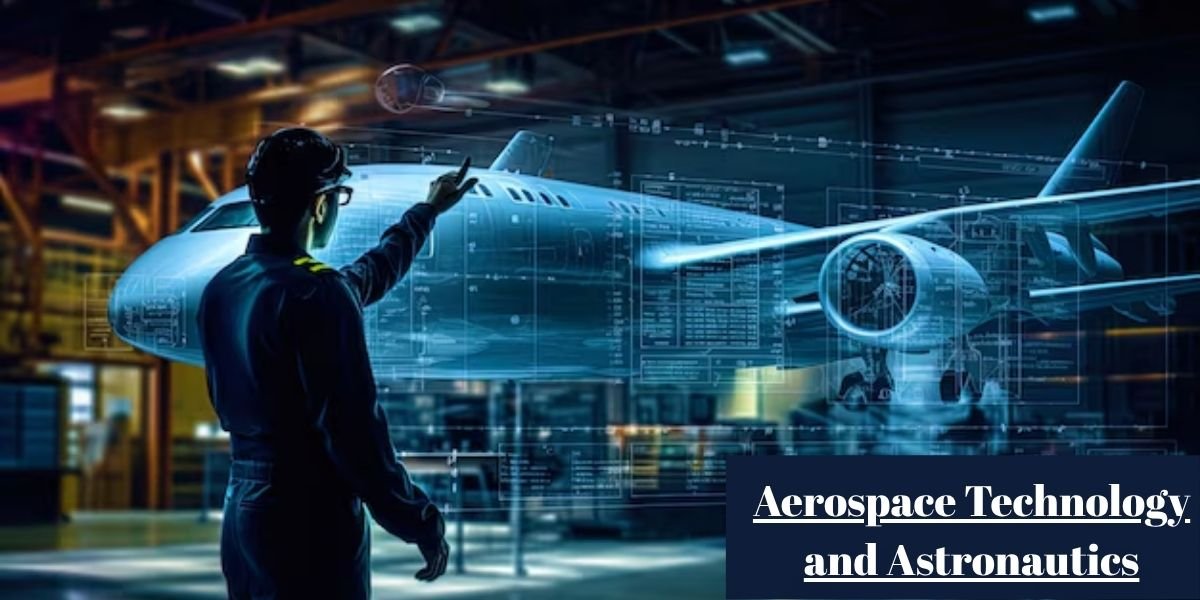
Building a machine that flies through dense atmosphere means controlling fluid dynamics, structural fatigue, and power conversion in real time. Building a machine meant to leave that atmosphere behind is an entirely different problem, governed by a different set of physical rules. Aircraft and spacecraft both fall under the umbrella of flight vehicles, yet they answer to opposite physics.
An aircraft depends on the air around it. Wings need atmospheric gas to generate lift, and most engines need oxygen from that same air to burn fuel. Every second of flight is a negotiation with turbulence, shifting pressure, and changing air density.
A spacecraft has no such help. It must survive brutal vibration and acoustic loads during the few minutes of launch, then operate for years inside a vacuum with no air to push against and no atmosphere to shield it from radiation or temperature extremes. Aerospace engineering is the discipline that reconciles both worlds, drawing on materials science, orbital mechanics, propulsion physics, and software to keep vehicles flying safely in either environment.
Aeronautics and Astronautics
Aerospace is shorthand for two separate engineering traditions, split by altitude and by the physics that govern them.
Aeronautics deals with everything that flies inside Earth’s atmosphere, including airliners, fighter jets, helicopters, and drones. Astronautics covers everything built to operate beyond it, such as launch vehicles, satellites, planetary probes, and crewed spacecraft like NASA’s Orion capsule.
Aerospace engineering sits above both, supplying the structural analysis, propulsion theory, and materials science each field draws from.
The split matters because the design priorities are almost inverted. An aeronautical engineer worries about lift-to-drag ratio, fuel burn per seat-mile, and how a wing responds to gusts. An astronautical engineer worries about specific impulse, radiation-hardened electronics, and surviving the descent phase NASA engineers nicknamed the seven minutes of terror during Mars landings.
Where the two disciplines overlap is where engineering gets hardest. Reusable rockets like SpaceX’s Starship, hypersonic glide vehicles, and re-entry capsules all fly through air and vacuum in the same mission, so their designers inherit the toughest constraints from both worlds at once.
Aircraft Design and Aerodynamics
An airplane’s shape is not aesthetic. Every curve on a wing exists to manipulate the air moving over it, because the balance between lift, drag, thrust, and weight decides whether the aircraft flies efficiently or barely flies at all.
Lift comes from creating lower pressure above the wing than below it, and the entire art of wing design is generating enough of that pressure difference without paying for it in drag. A long, slender wing, the kind found on gliders and long-haul airliners such as the Boeing 787, reduces induced drag and stretches fuel efficiency during cruise. A thin, sharply swept wing, closer to what you see on a fighter jet or the retired Concorde, delays the shockwaves that build up near the speed of sound.
Stability is the quieter half of the equation. Engineers position the center of gravity relative to the center of lift so the airframe naturally resists turbulence, then size the tail and control surfaces to correct for whatever the airframe alone cannot. As altitude climbs and the air thins, there is less dynamic pressure for control surfaces to push against, which is why high-altitude aircraft are tuned differently from those flying near sea level.
Aircraft Propulsion
Every air-breathing engine works on the same basic principle: pull in air, accelerate it, and throw it out the back faster than it came in. Which engine architecture does that job best depends entirely on the mission.
- Turbofans power almost every commercial airliner in service today, from the CFM LEAP engines on the 737 MAX and A320neo to the Rolls-Royce Trent XWB on the Airbus A350. A large front fan bypasses most incoming air around the combustion core, which makes turbofans efficient at subsonic cruise.
- Turbojets send all intake air straight through the core, producing the high-velocity exhaust supersonic flight needs at the cost of higher fuel consumption.
- Turboprops couple a gas turbine to a reduction gearbox and propeller, remaining the most efficient option for regional routes flown at lower speed and altitude.
- Piston engines, the same basic technology found under a car’s hood, power most light general aviation aircraft because they are cost-effective to buy, maintain, and overhaul.
- Electric and hybrid-electric propulsion is the newest entrant, using battery packs or hybrid generators to drive distributed electric fans on short-range aircraft, trading range for lower emissions and quieter operation near airports.
Selecting the right engine comes down to a trade between thrust, fuel burn, weight, and drag, and no single architecture wins on all four.
Flight Controls and Avionics
Flying an aircraft means constantly managing rotation around three axes: pitch, roll, and yaw. The classic surfaces behind this, elevators, ailerons, and rudders, are supported by flaps, slats, and spoilers that reshape the wing for takeoff and landing.
Modern airliners run these surfaces through an avionics suite that constantly watches the aircraft’s state. Pitot-static probes, inertial measurement units, and air data computers feed a continuous stream of telemetry to the flight computers, which makes automated flight possible.
Fly-by-wire replaced mechanical cables with digital control loops decades ago. The Airbus A320, which entered service in 1988, was the first commercial airliner built around a full fly-by-wire system, and Boeing followed with the 777 in the 1990s. Flight computers interpret pilot inputs, compare them against sensor data, and command actuators without letting the aircraft exceed its structural or aerodynamic limits, which enables auto-landing and computed flight paths that shave minutes and fuel off long routes.
Spacecraft Design and Space Systems
None of the assumptions that shape aircraft design survive the trip past the atmosphere. Air density drops to zero, so there is no convective cooling and no aerodynamic lift. Solar radiation intensifies with no atmosphere to filter it, and the vehicle’s motion is governed by orbital mechanics rather than airflow.
A spacecraft frame has to survive the punishing mechanical loads of launch, then switch modes entirely into years of vacuum operation with no possibility of a repair visit, apart from rare exceptions like the shuttle servicing missions that once kept the Hubble Space Telescope alive.
Structures Must Survive Launch and Spaceflight
The worst structural abuse a spacecraft ever takes happens in the first minutes of its life. Rocket engines generate intense low-frequency acoustic vibration and sustained high acceleration as the vehicle claws through the dense lower atmosphere, and the primary structure has to absorb it all without flexing enough to damage the payload.
Engineers lean on aluminum-lithium alloys, carbon-fiber composites, and honeycomb-core panels to hit that strength-to-weight target. SpaceX’s Falcon 9 uses an aluminum-lithium alloy for its propellant tanks specifically because it shaves mass without sacrificing strength. Once the spacecraft reaches orbit, deployable mechanisms unfold solar arrays, instrument booms, and antenna reflectors using pyrotechnic releases, electric motors, or shape-memory alloys engineered to work reliably after months of exposure to vacuum and temperature swings.
Thermal Control Becomes a Mission Requirement
With no air to carry heat away by convection, a spacecraft has only radiation and internal conduction to keep its temperature in check. A sun-facing surface can climb past 120 degrees Celsius while a shaded surface a few meters away drops below minus 100 degrees Celsius, and the electronics, batteries, and propellant lines in between all need to stay within a narrow safe range.
Passive protection usually comes first: multi-layer insulation blankets made from aluminized Kapton or Mylar, the same material family behind the James Webb Space Telescope sunshield, along with reflective coatings and radiator panels that vent excess heat to deep space. Where passive measures are not enough, electric resistance heaters take over during eclipse periods when a satellite passes into Earth’s shadow and loses solar power entirely.
Power and Communications Support the Mission
A spacecraft has to generate every watt it will ever use, store what it does not need immediately, and manage all of it with no backup grid. Satellites in the inner solar system rely on solar arrays built from high-efficiency multi-junction photovoltaic cells, charging lithium-ion batteries that carry the vehicle through eclipse periods when sunlight is blocked.
Beyond the orbit of Jupiter, sunlight becomes too weak to rely on, which is why deep-space missions turn to radioisotope thermoelectric generators (RTGs). NASA’s Voyager 1 and Voyager 2, launched in 1977 and still transmitting from interstellar space, run on RTGs, and so do New Horizons, which flew past Pluto in July 2015, and the Perseverance rover currently exploring Mars.
Communications work through a similar layered logic. High-gain parabolic antennas carry the bulk of payload data across enormous distances, while low-gain omnidirectional antennas handle basic commands during orbit insertion or emergency safe mode. NASA has even begun testing laser-based deep-space communication through the Psyche mission’s optical demonstration, which promises far higher data rates than radio once the technology matures.
Propulsion Changes From Aircraft to Spacecraft
The line between aircraft and spacecraft propulsion comes down to one question: where does the oxidizer come from? Aircraft engines breathe it in from the air. Spacecraft engines carry their own, or skip combustion altogether and use electricity instead.
Aircraft Propulsion
Turbofans, the workhorses of commercial aviation, bypass most intake air around the engine core for fuel efficiency. Turbojets burn everything that comes in, generating the raw exhaust velocity supersonic flight demands. Turboprops trade top speed for efficiency at lower altitudes, and piston engines keep general aviation affordable. Electric propulsion, still limited to short-range aircraft, eliminates local emissions entirely.
Rocket Propulsion
A rocket engine obeys Newton’s third law in its purest form. Throw mass backward fast enough and the vehicle moves forward, with or without air to push against.
Liquid-propellant engines store fuel and oxidizer in separate tanks and feed them into a combustion chamber using turbopumps or pressurized gas. SpaceX’s Raptor engines, burning methane and liquid oxygen to power Starship, allow the throttling and in-flight restart solid rockets cannot do. Starship’s test flight on May 22, 2026, flew the Block 3 hardware, with 33 Raptor 3 engines on the Super Heavy booster alone, showing how this technology continues to evolve.
Solid-propellant motors pack fuel and oxidizer into a single solid grain inside the motor casing. Once lit, they burn until the propellant is gone, with no valves or turbopumps to fail, which is why they remain popular for boosters and tactical systems where simplicity outweighs flexibility.
Engineers judge propulsion efficiency using specific impulse, the thrust generated per unit of propellant burned each second. Higher specific impulse means less propellant mass is needed for the same change in velocity, which is why the number gets so much attention in mission design. Multi-stage rockets improve on this by shedding empty tanks and spent engines mid-flight, so each remaining stage only accelerates what is left.
Electric Propulsion for Space Missions
For missions measured in months or years rather than minutes, propellant efficiency usually matters more than raw thrust. Electric propulsion, principally ion thrusters and Hall-effect thrusters, uses solar-generated electricity to ionize a noble gas, usually xenon, then accelerates those ions out of the nozzle using electric or magnetic fields.
NASA’s Dawn spacecraft used ion propulsion to become the first mission ever to orbit two separate bodies beyond Earth, Vesta and then Ceres, a feat that would have been fuel-prohibitive with chemical engines. NASA’s Psyche spacecraft, launched in October 2023 toward the metal-rich asteroid 16 Psyche, uses Hall-effect thrusters as its main propulsion. The thrust is small, often a fraction of a newton, but running continuously for months lets a spacecraft reach velocities chemical rockets could never afford in propellant.
Guidance, Navigation and Control
Guidance, navigation, and control, usually shortened to GNC, is the layer of logic that decides where a vehicle needs to go, figures out where it currently is, and then commands the hardware to close that gap.
- Guidance plots the trajectory and speed changes needed to reach a destination.
- Navigation tracks the vehicle’s actual position, velocity, and orientation against a known reference frame.
- Control translates that information into commands the actuators can act on.
Aircraft navigation fuses data from inertial sensors, GPS, and magnetic compasses, while guidance software plots routes that save fuel and steer around severe weather. Control systems then move the elevators, ailerons, and rudders to keep the aircraft on that path through whatever turbulence it meets.
Spacecraft handle the same three jobs without any aerodynamic surfaces to help. Navigation leans on star trackers, sun sensors, horizon sensors, and ground-station tracking. Guidance software plans engine burns and orbital rendezvous maneuvers, the kind used routinely for crew dockings with the International Space Station, in continuous operation since November 2, 2000. With no air to push against, attitude control instead relies on reaction wheels, control moment gyroscopes, or reaction control thrusters that rotate the spacecraft to aim an instrument or antenna precisely.
Aerospace Materials and Structures
Every gram matters in aerospace, for two different reasons. Extra weight on an aircraft burns more fuel over its operational life. Extra weight on a launch vehicle comes directly out of the payload it can deliver to orbit. Materials must survive extreme stress, wide temperature swings, and years of vibration without failing, so the choice of material is rarely accidental.
High-strength aluminum alloys, particularly the 2024 and 7075 grades, built the aviation industry for most of the twentieth century because they machine predictably and weigh little. Titanium alloys, especially Ti-6Al-4V, take over wherever heat and stress peak together, such as engine compressor sections and wing joints. Nickel-based superalloys handle the hottest zone of all inside turbine sections, where temperatures routinely exceed what standard structural metals can survive.
Composite Materials
Carbon-fiber reinforced polymer (CFRP) has reshaped modern airframe design more than almost any material innovation before it. Carbon fibers set inside a polymer resin deliver tensile strength comparable to steel at a fraction of the weight. Unlike metal, composites resist fatigue cracking and corrosion, letting engineers tune stiffness along specific load paths by adjusting fiber orientation during manufacturing.
Composites make up roughly half the structural weight of the Boeing 787 Dreamliner and slightly more on the Airbus A350 XWB, including fuselage sections that would have been aluminum a generation ago. Spacecraft use the same family of material differently, building composite sandwich panels around honeycomb cores for lightweight instrument mounts and antenna dishes.
Additive Manufacturing
3D printing, known in industry circles as additive manufacturing, has moved from prototyping curiosity to production-line reality faster than expected a decade ago. Laser powder-bed fusion builds complex metal parts layer by layer from titanium, steel, or nickel alloy powder, producing shapes traditional machining could never cut.
Rocket Lab’s Electron rocket flies with a 3D-printed engine, the electric pump-fed Rutherford, and Relativity Space demonstrated an almost entirely 3D-printed rocket structure with its Terran 1 test flight in March 2023. The real advantage is integration. Additive manufacturing lets engineers combine dozens of parts into a single printed piece, cutting fasteners and failure points, while embedding cooling channels directly into combustion chambers that would be impossible to machine any other way.
Systems Engineering and Vehicle Integration
An aerospace vehicle is never a collection of independent parts. It is a tightly coupled system where a change anywhere ripples through the rest.
Boost an engine’s output and you raise the heat it dumps into the airframe, forcing a redesign of the cooling system. Add more onboard power demand and you need bigger batteries or larger solar arrays, both of which add weight and shift the center of gravity.
Systems engineering exists to manage this kind of cascading complexity. Rather than optimizing individual components in isolation, systems engineers weigh trade-offs across the entire vehicle. Add a larger radar to a military aircraft, and the team has to rebalance the power budget, resize the cooling loop, and recalculate the center-of-gravity offset before a single part is bolted on.
Modeling and Simulation Reduce Design Risk
Long before a single physical prototype exists, aerospace teams model the vehicle’s physics digitally:
- Computer-Aided Design (CAD) builds precise 3D geometry and checks that components physically fit and balance correctly.
- Computational Fluid Dynamics (CFD) simulates airflow across aerodynamic surfaces, mapping pressure fields, turbulence, and shockwave formation before a wind tunnel is booked.
- Finite Element Analysis (FEA) predicts where structural stress and thermal gradients will concentrate under extreme load cases, catching failure points that would otherwise only surface in testing.
- Flight Simulation and Hardware-in-the-Loop (HITL) rigs run the actual flight software against real hardware benches, confirming correct behavior in both routine and emergency scenarios.
Testing Turns Engineering Models Into Evidence
A simulation is a prediction, not proof, which is why physical testing remains non-negotiable no matter how good the software gets.
Wind-tunnel testing validates CFD predictions by running scale models through instrumented airflow and measuring the real forces involved. Ground engine testing verifies thrust, fuel burn, and operating temperature under simulated altitude conditions. Structural vibration testing puts complete airframes through shaker tables and physical load tests to confirm the margins engineers calculated on paper actually hold. Thermal-vacuum testing seals a finished spacecraft inside a chamber that mimics the extremes of space, verifying the thermal design before the vehicle leaves Earth. Flight testing, the final step, evaluates the fully integrated vehicle under real conditions. Boeing’s 777X program had passed 55 percent of its required certification flights by mid-2026, even as GE Aerospace worked through a mid-seal durability issue on the GE9X engine that briefly paused deliveries.
Modern Aerospace Engineering Is Becoming More Software-Driven
Software has quietly become as central to aerospace as aluminum and titanium ever were. Flight computers run continuous diagnostic checks, real-time control calculations, and automated adjustments throughout every flight, work that once depended entirely on pilot judgment or ground controllers.
Artificial intelligence has moved from research curiosity into everyday design workflow. Generative design algorithms help structural engineers shape components that minimize mass while holding strength along the load paths that matter most. Onboard, autonomous software handles tasks that outpace human reaction time or that run through communication delays too long for real-time control from Earth. Deep-space probes use autonomous navigation to adjust their own descent and landing sequences, since a radio signal from Mars can take over ten minutes to arrive, and uncrewed aircraft use similar logic to hold course and manage faults on their own.
Digital twins, virtual replicas of a physical aircraft or spacecraft updated continuously from real sensor data, let engineers track structural wear and schedule maintenance before a part actually fails rather than after.
Where Aerospace Technology Is Used
Aerospace technology underpins global transport, national defense, telecommunications, and most of modern scientific research.
Commercial aviation moves passengers and freight across the planet on fuel-efficient transport aircraft. Military aviation operates everything from tactical fighters to strategic transports and uncrewed surveillance systems. Satellite constellations supply the backbone for GPS positioning, global broadband, and environmental monitoring, and the scale has grown remarkably fast. SpaceX’s Starlink network crossed 11,000 satellites in orbit on August 19, 2026, meaning one constellation accounts for roughly two-thirds of all active satellites circling Earth.
Earth observation satellites track weather systems, monitor ocean conditions, assess crop health, and support disaster response during floods, wildfires, and hurricanes. Space science missions, from orbiting telescopes like James Webb to planetary rovers and deep-space probes, continue expanding what is understood about the solar system and beyond. Human spaceflight keeps astronauts aboard the International Space Station year-round while NASA works toward returning crews to the Moon, following Artemis II’s nine-day crewed lunar flyby in April 2026, which carried astronauts Reid Wiseman, Victor Glover, Christina Koch, and Jeremy Hansen farther from Earth than anyone since Apollo 13. Uncrewed aerial systems handle infrastructure inspection, surveying, emergency deliveries, and environmental monitoring at a scale once impractical with crewed aircraft.
Aerospace Technology in Commercial and Scientific Applications
Technology developed for aerospace rarely stays confined to aerospace. Composite manufacturing techniques refined for aircraft structures strengthen automotive frames, build efficient wind turbine blades, and produce advanced medical prosthetics. Computational fluid dynamics software written to analyze airfoils applies just as readily to industrial ventilation design, high-speed train profiles, and ship hull optimization.
Satellite communications bring reliable connectivity to regions terrestrial infrastructure has never reached, while precision satellite positioning underpins maritime shipping, automated logistics, and precision agriculture. Earth observation data helps land management agencies track deforestation, monitor climate indicators, and manage natural resources at a scale no ground survey could match.
The technology born from solving the hardest problems in atmospheric flight and space travel, including extreme lightweighting, autonomous control, and thermal management under impossible conditions, keeps finding its way into industries that never thought about orbital mechanics. That is arguably aerospace engineering’s most underappreciated contribution: not just the vehicles themselves, but the ripple effect of solving problems hard enough that everything downstream gets easier.